Applications
Why Air Separation Pre-Purification Removes Both Water and Carbon Dioxide
Air separation units remove water and carbon dioxide from air before it is cooled, because both would freeze solid inside the cold box. This article explains why.
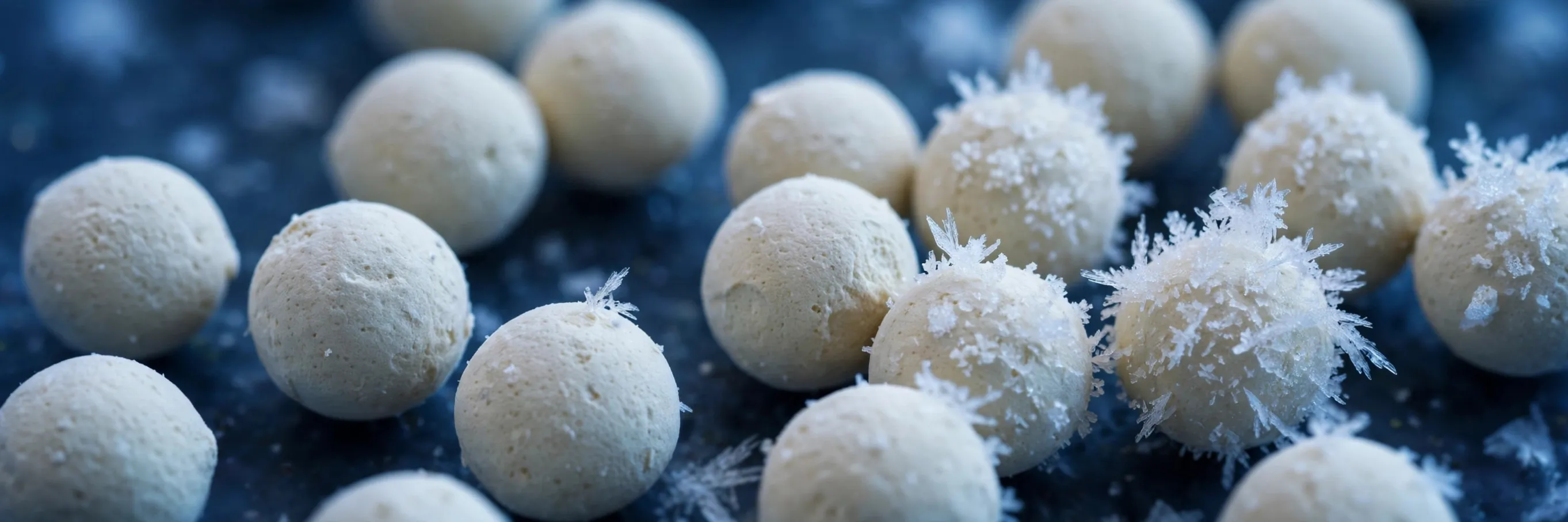
A cryogenic air separation unit cools air to around −170 °C or lower. At those temperatures, two ordinary components of air stop behaving like gases at all — and that is the entire reason the pre-purification unit (PPU) exists.
Water: the obvious one
Air always contains water vapour. Cooled below 0 °C it condenses and freezes; in an air separation plant it would deposit as ice in the main heat exchanger and the cold box, blocking passages and forcing a shutdown and warm-up. Water must therefore be removed almost completely, to dew points far below anything weather can produce, before the air is cooled.
Carbon dioxide: the quieter one
Carbon dioxide is only about 0.04% of air, but it freezes at −78.5 °C — far above cold-box temperatures. Any CO2 entering the plant deposits as a solid in the heat exchanger passages. The deposits narrow the passages, disturb heat transfer, and in time force the same shutdown as water ice. CO2 has a second, less visible effect: it can accumulate in liquid oxygen together with hydrocarbons, which is a recognised safety concern in air separation. For both reasons, CO2 is removed in the same step as water, down to very low levels.
Why one unit removes both
The two contaminants are removed together because the same adsorbent captures both. In a typical PPU, compressed air passes through beds of adsorbent — commonly a layer arrangement using activated alumina for bulk water removal and 13X molecular sieve, whose roughly 10 Å pores and strong affinity capture both water and carbon dioxide. While one bed is adsorbing, the other is regenerated with heated waste gas, and the beds switch on a cycle of a few hours. The arrangement works because water is far more strongly held than CO2: the bed sizing and cycle must ensure CO2 breaks through never, even though it is the weaker-held component.
What this means when you specify adsorbent
Because CO2 is the limiting component, a PPU adsorbent is not chosen on water capacity alone. Feed CO2 content, operating pressure and temperature, flow rate, target outlet specification and cycle time all decide the quantity and grade required. Send us those conditions from your unit, and we will check the 13X grade and loading quantity for your next changeout — before the cold box reminds you why this step matters.